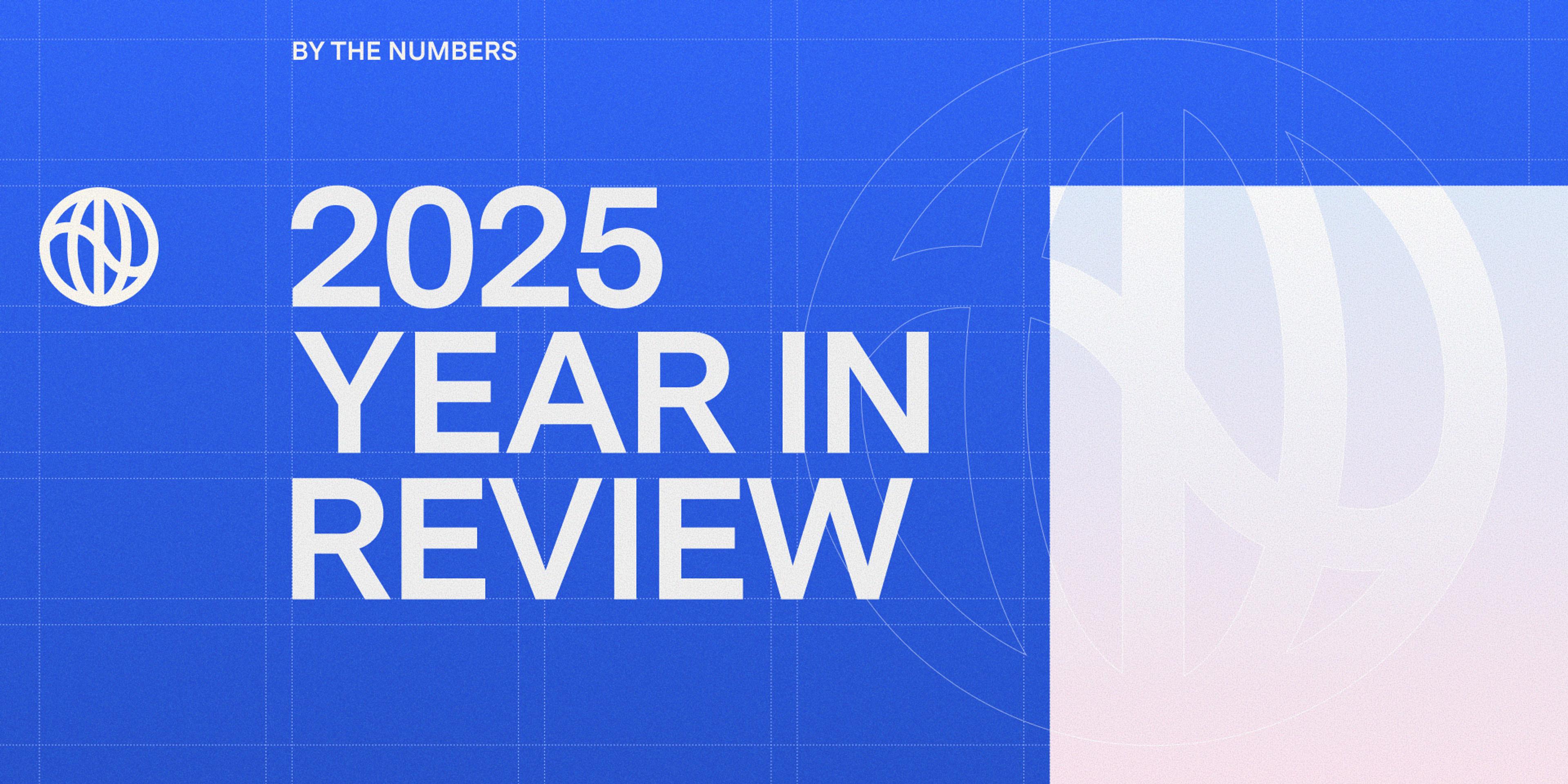
In 2025, companies navigated big policy shifts while sharpening focus on the common core of sustainability: credible measurement, audit‑ready disclosures, and real reductions in operations and supply chains. Our year was about enabling that progress—through customer collaboration, AI breakthroughs, and open data that raises the floor for everyone.
Evolving the market’s most advanced and actionable platform
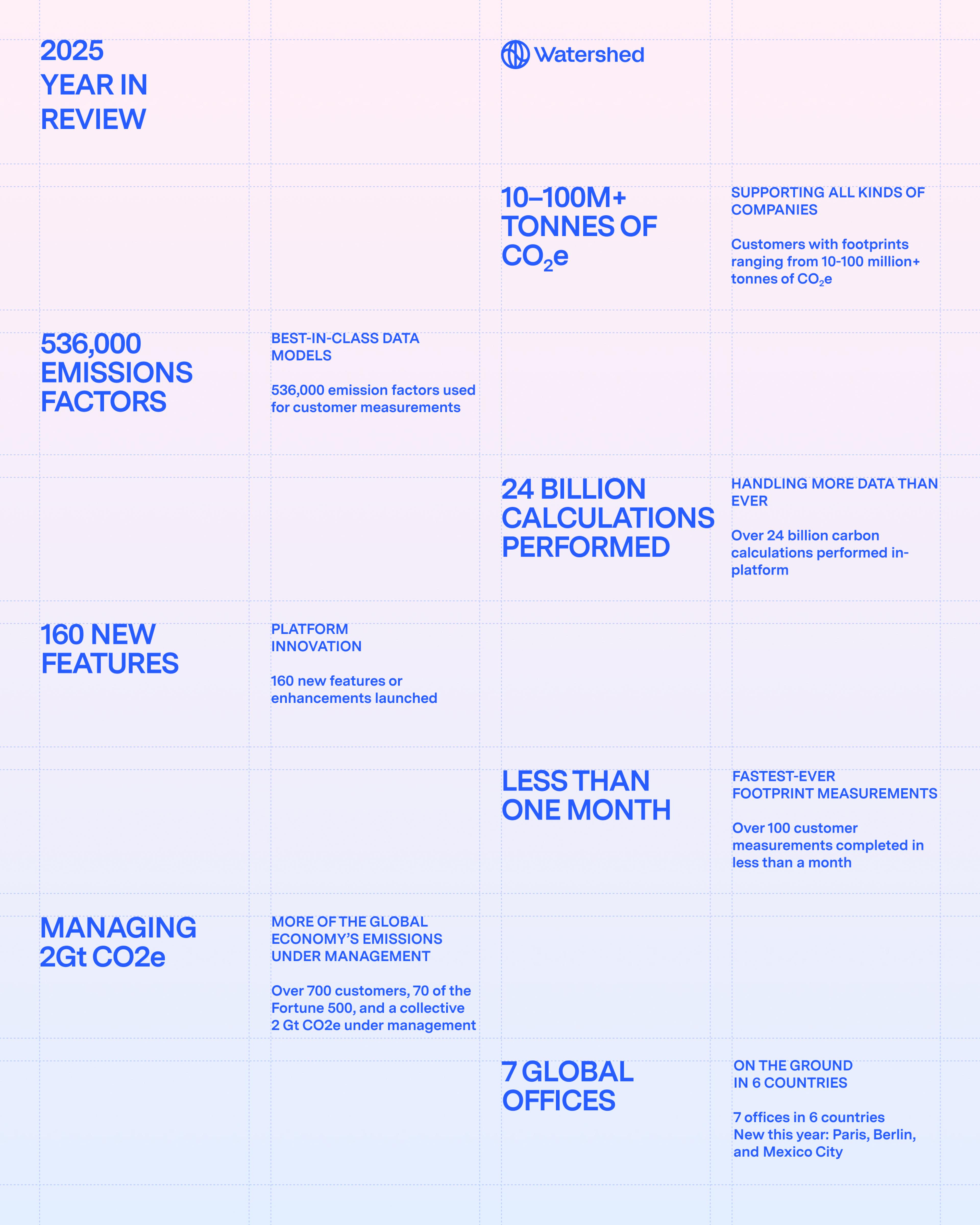
Building a platform that can scale with you and an ever-changing sustainability field, we introduced more than 160 new features and platform enhancements in 2025. Notable releases included:
Groundbreaking AI-powered physical goods measurement
In September, we introduced a first-of-its-kind AI tool, Product Footprints, which combines AI engineering, climate science, and input from the world’s most complex businesses to solve the problem of scope 3 emissions measurement. Product Footprints generates upstream PCFs at pace, traces materials and processes, and lets procurement and product teams run “what‑if” scenarios that roll up to the corporate footprint.
Product Footprints upends the status quo of scope 3 measurement in which companies have to choose between scalability or actionability, unlocking data to inform more sustainable product decisions—and yielding huge global decarbonization potential.

Streamlined measurement
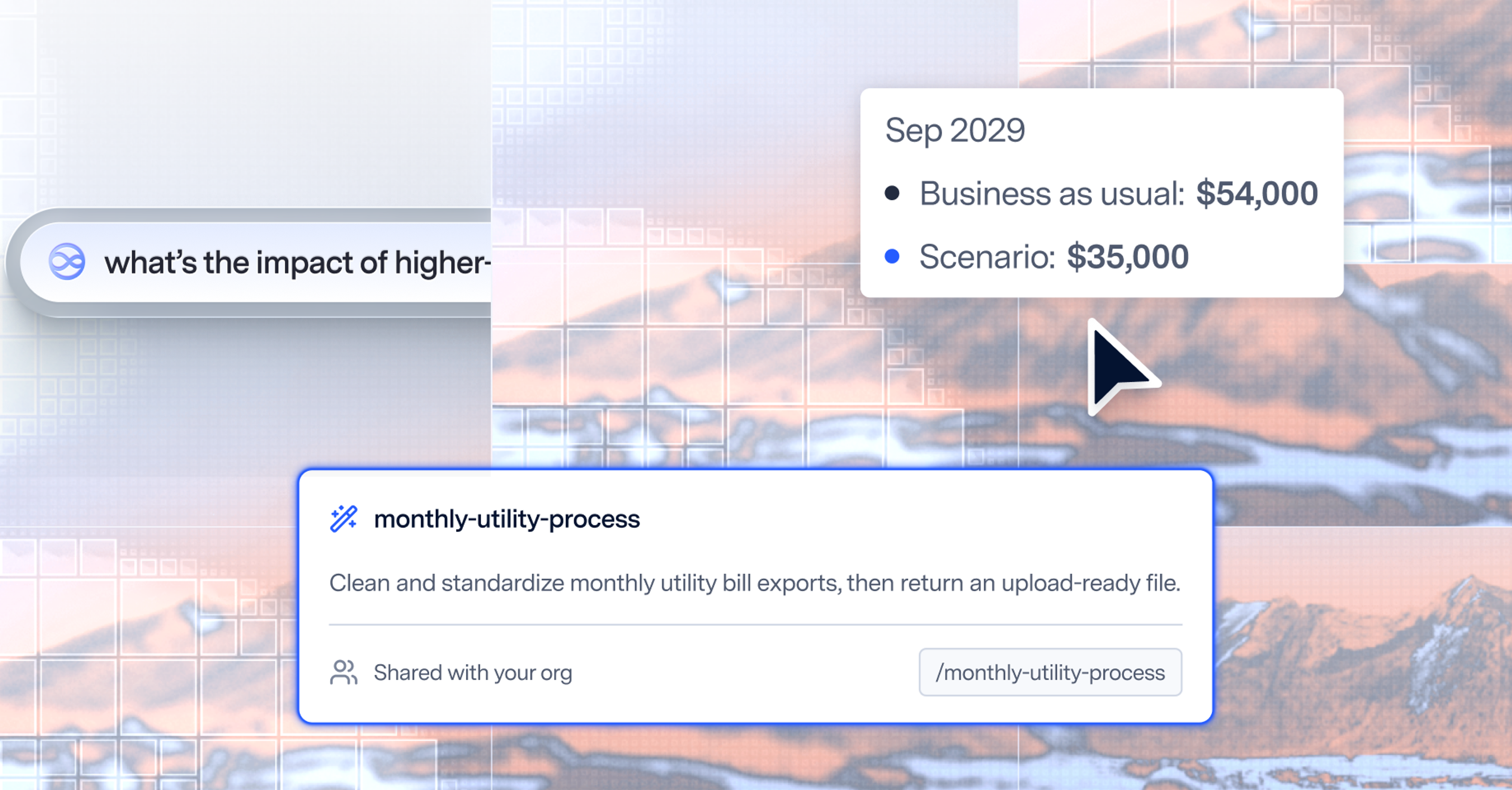
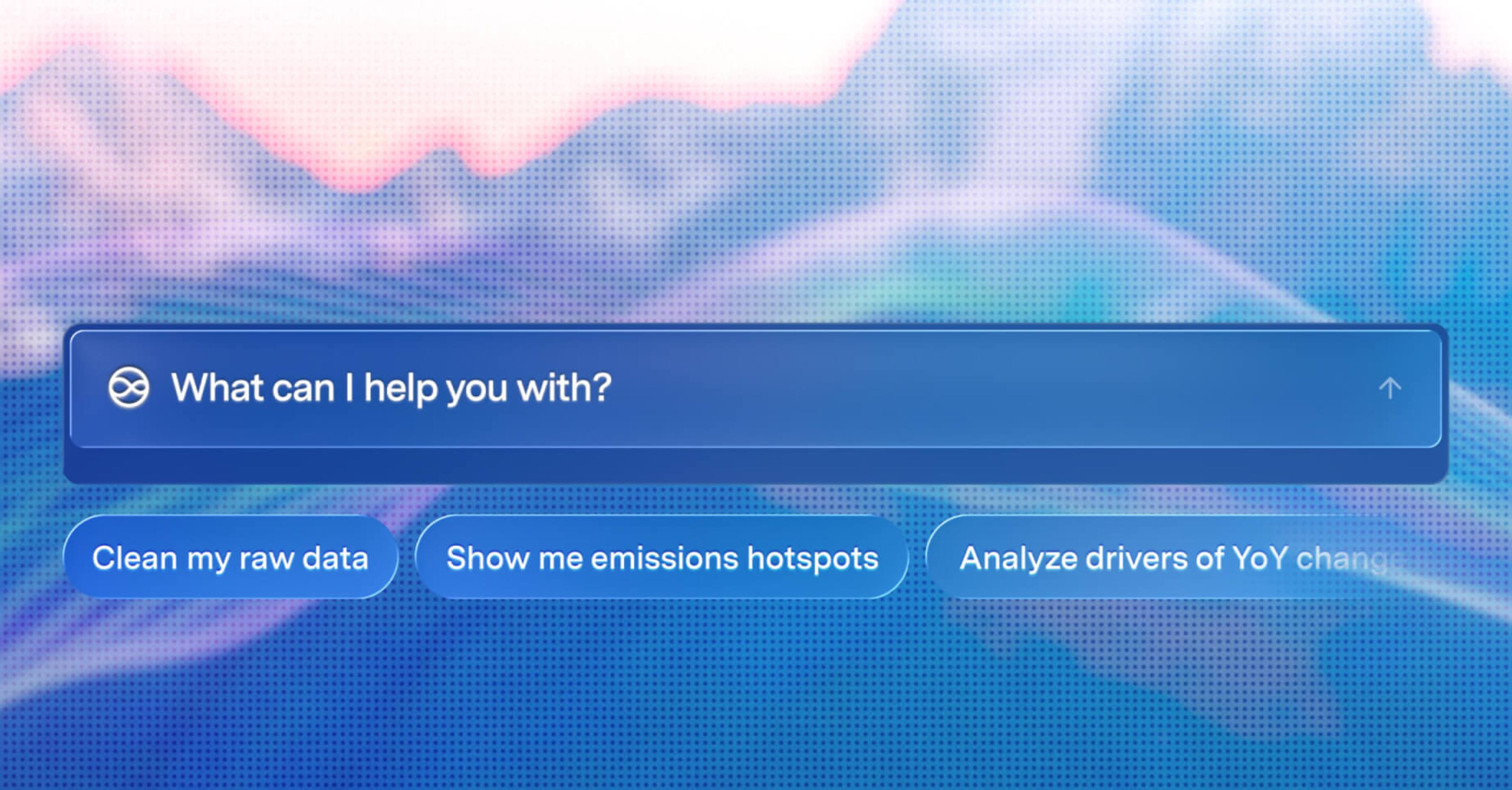
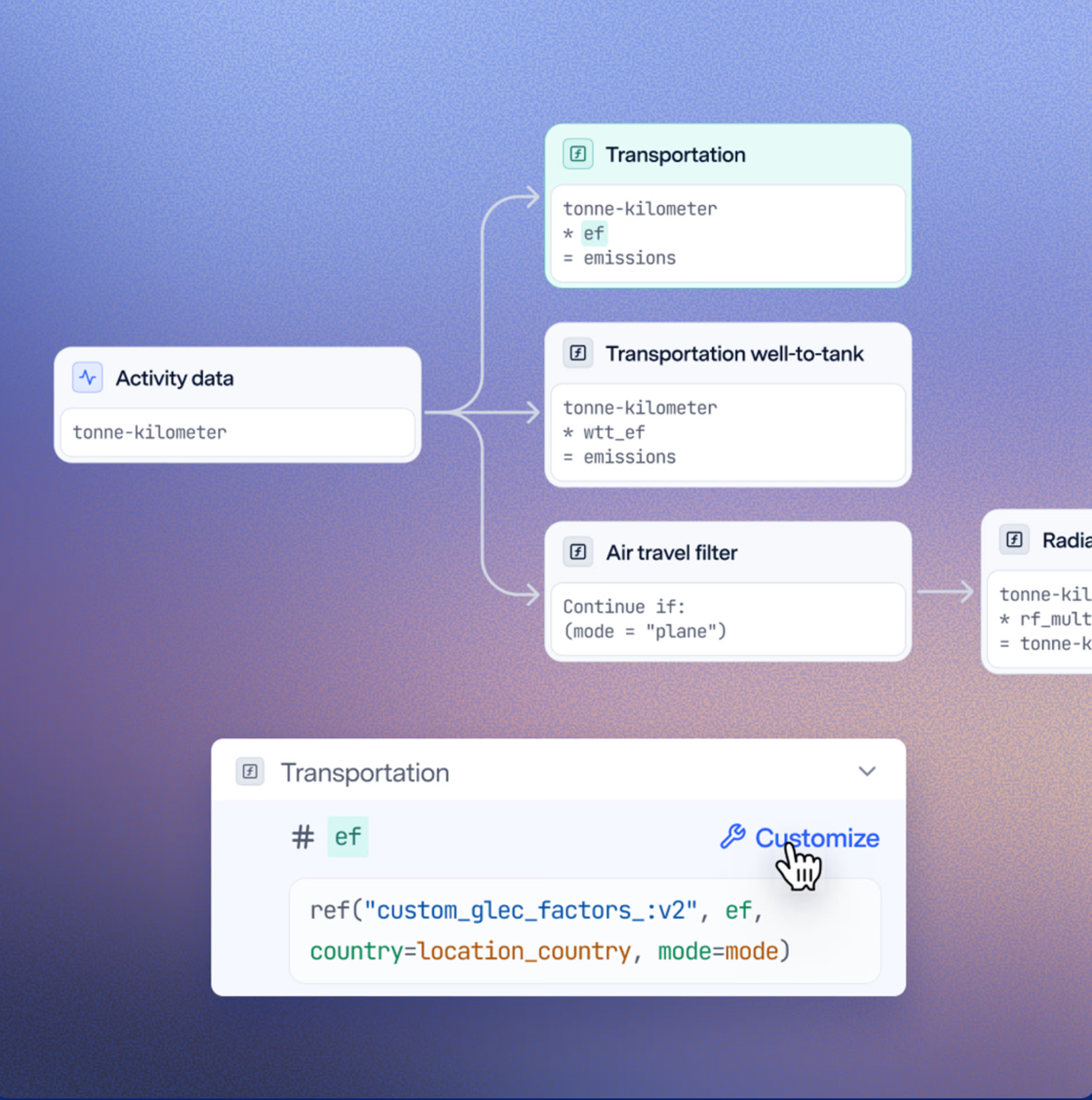
We shipped continuous improvements to measurement and data operations: AI-powered utility bill ingestion, AI auto‑mapping for scope 3, calculation customization, flexible footprint configuration by unit/region, expanded end‑to‑end data lineage, and richer “drill down” analysis by activity. Together, these upgrades move teams from manual data wrangling to audit‑ready, decision‑useful insights so reductions show up faster and more credibly in the numbers.
California report drafting
As California advanced implementation of its climate disclosure laws, SB 253 and SB 261, we built the latest framework directly into Watershed’s guided report builders and added AI‑accelerated drafting on top of audit‑ready measurement.
The throughline: speed with transparency. Every product update reinforced traceability, controls, and data rigor that stand up to scrutiny.
A cross-industry customer base leading the way on corporate sustainability
Customers across sectors used Watershed to translate sustainability priorities into operational decisions.
In supply chain decarbonization, customers leaned into Product Footprints to move beyond spend‑based estimates—decomposing what they buy into materials and processes, comparing supplier‑specific scenarios, and reflecting those choices in both product carbon footprints and corporate scope 3.
“Watershed’s AI has unlocked the ability of understanding data at scale and turning it into practical insights."
Natalie Watson, Vita’s Group Director of Sustainability
The Vita Group, a leading flexible polyurethane foam manufacturer with pan European operations, is using Watershed’s Product Footprints to turn scattered supplier data into precise, apples‑to‑apples insights on materials and processes—so procurement can compare suppliers, validate LCAs, and choose lower‑carbon inputs with confidence. It’s helping them move beyond a handful of LCAs to spot patterns across thousands of purchases and run what‑if scenarios that drive real scope 3 reductions and faster decision‑making.
We’re meeting customer demand for decarbonization solutions: We launched a landmark Clean Power RFP with Powertrust to source 150 MW across 100+ distributed projects in emerging markets—unlocking credible, additional impact where grids are dirtiest. We also issued our first-ever Carbon RFP for 1 megatonne of carbon removal for Watershed customers, the first on the market to procure both nature-based and engineered removals together.
Albany International is using Watershed to centralize and scale onsite solar—turning scattered, site‑level proposals into an investment‑ready roadmap with clear ROI, multiple RFPs in flight, and tangible cost and scope 2 reductions. Alongside a Watershed‑structured clean power strategy, Albany can compare opportunities across sites, model financials, and move quickly where the business case is strongest.
“I’m not an expert in energy markets or VPPA structuring—and I don’t need to be. Partnering with Watershed has given us direct access to that expertise.”
Anna Yates, Head of Sustainability at Albany International.
Democratizing access to essential sustainability data
In 2025, we invested in data resources to underpin the climate economy. In May, we launched Open CEDA—a free, globally representative emissions factor database that covers 148 countries and 400 industries—so organizations of every size can ground decisions in higher‑quality data.
Following the announcement that the EPA would no longer support the development of the US Environmentally-Extended Input-Output (USEEIO) Models, we partnered with Stanford’s Sustainable Solutions Lab and ERG to launch Cornerstone, a hub to preserve and expand the foundational datasets that power scope 3 accounting and, over time, converge USEEIO and CEDA into a single, open global model. Cornerstone’s first update to CEDA and USEEIO was released in October, and showed a median 2% decrease in corporate emissions per dollar spent in the last year, reflecting global economic and energy changes and further signaling that business growth and emissions growth can be decoupled.
Open, credible data is how we move from proxies to progress. By improving and sharing the building blocks of emissions measurement, we aim to raise the floor for precision across the economy.
Strategic counsel across a shifting global policy landscape
With reporting delays confirmed for later CSRD waves and a parallel drive to simplify ESRS datapoints, we advised customers to double down on a durable core for EU climate disclosure, including scopes 1-3 measurement and assurance, so reporting remains future‑proof regardless of final thresholds or datapoint reductions.
In the US, California moved from principle to practice. CARB progressed implementation for SB 253 and SB 261, closing consultation and moving toward technical requirements and templates. Our guidance centered on mobilizing data owners, confirming filing structures, and helping teams adapt to late-breaking changes to timelines and details. We baked those updates into the product so customers can act now and refine as rules finalize.
What’s next
Corporate sustainability is set for a major transformation in 2026, driven by the convergence of three key forces: the expanding influence of AI, shifts in global energy demand, and a changing regulatory landscape. To successfully manage their sustainability programs, companies need to understand how these different elements work together. Watershed is addressing these forces to move sustainability forward, including by responsibly deploying AI and implementing new strategic approaches for decarbonization.
2025 was a year of growth, challenge, and transition—thank you for building alongside us.