Food and beverage companies face one of the hardest measurement problems in sustainability. Agricultural supply chains span millions of farms, dozens of commodities, and emissions drivers—like land use change and soil chemistry—that vary enormously from one product to the next. Capturing that variation takes more detailed models than most sources can provide. No single dataset covers it all, and most sustainability teams have spent years stitching sources together by hand.
A few months ago, we introduced our flexible platform approach: the conviction that your measurement platform should work with the data you trust, not lock you into one source. Now, that approach takes another major step forward.
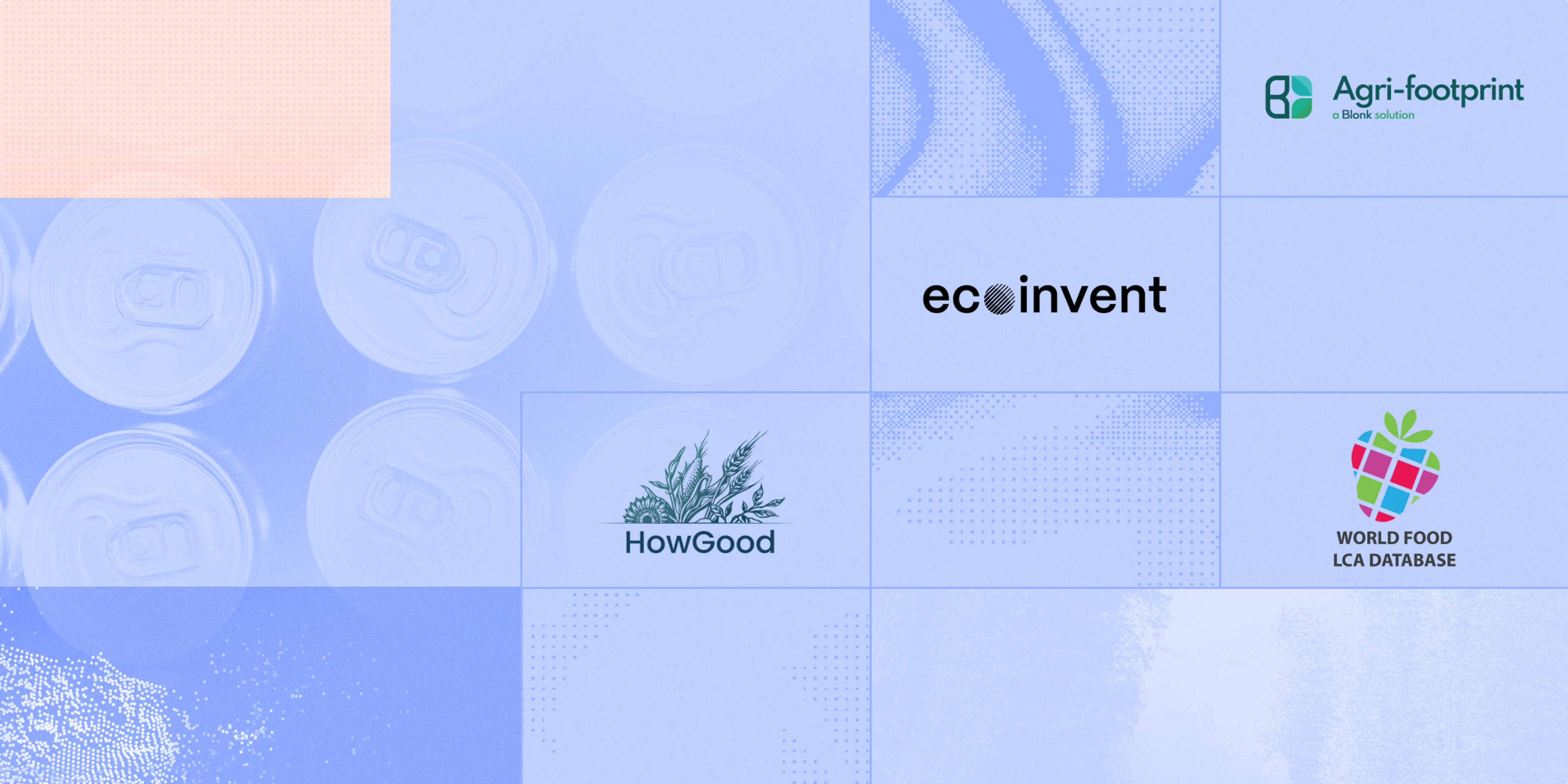
Announcing the most extensive food and beverage dataset ever compiled in one place. Starting today, customers can use data from Agri-footprint (Mérieux NutriSciences | Blonk), WFLDB (Quantis), and HowGood in Watershed Product Footprints, our AI-powered platform for building product carbon footprints (PCFs). Customers now benefit from the deep research and domain expertise these sources are known for, while leveraging the power of Watershed to make data and PCFs fully editable, analyzable, and updatable inside the platform.
And for food customers looking to account for land use change in their supply chains, we plan to introduce a jurisdictional land use change (jdLUC) data solution soon.
What each collaboration unlocks
Agri-footprint (Mérieux NutriSciences | Blonk)—One of the world's most rigorous agricultural LCA databases, with regionally differentiated inventory data and FLAG coverage. Through our sublicense agreement, Watershed can offer Agri-footprint access to customers who didn't previously license it.
WFLDB (Quantis)—The World Food LCA Database brings peer-reviewed, food-specific emission factors for global supply chains, now natively interoperable in the platform.
HowGood—Product and ingredient-level sustainability intelligence, built on the largest agricultural emissions database in the world, now available within Product Footprints.
Native means native
These aren't flat file imports, and they aren't black boxes. We translate each source into a production graph—the same structure that leverages ecoinvent in Watershed today—faithfully representing and documenting the provider's methodology, node by node. No AI required to build, run, or trust them. Because they share one structure, every source becomes interoperable: you can combine, compare, and edit across them in the same environment your team uses to build PCFs.
Given every data source is fully decomposable (not just a flat emissions factor), customers can dive deeper to take actions like:
- Hotspot identification: Pull any model apart to see exactly which processes, inputs, and land-use assumptions drive the footprint—across any source, in one consistent view. Understand hotspots even in the most complex PCFs, regardless of which database underpins them.
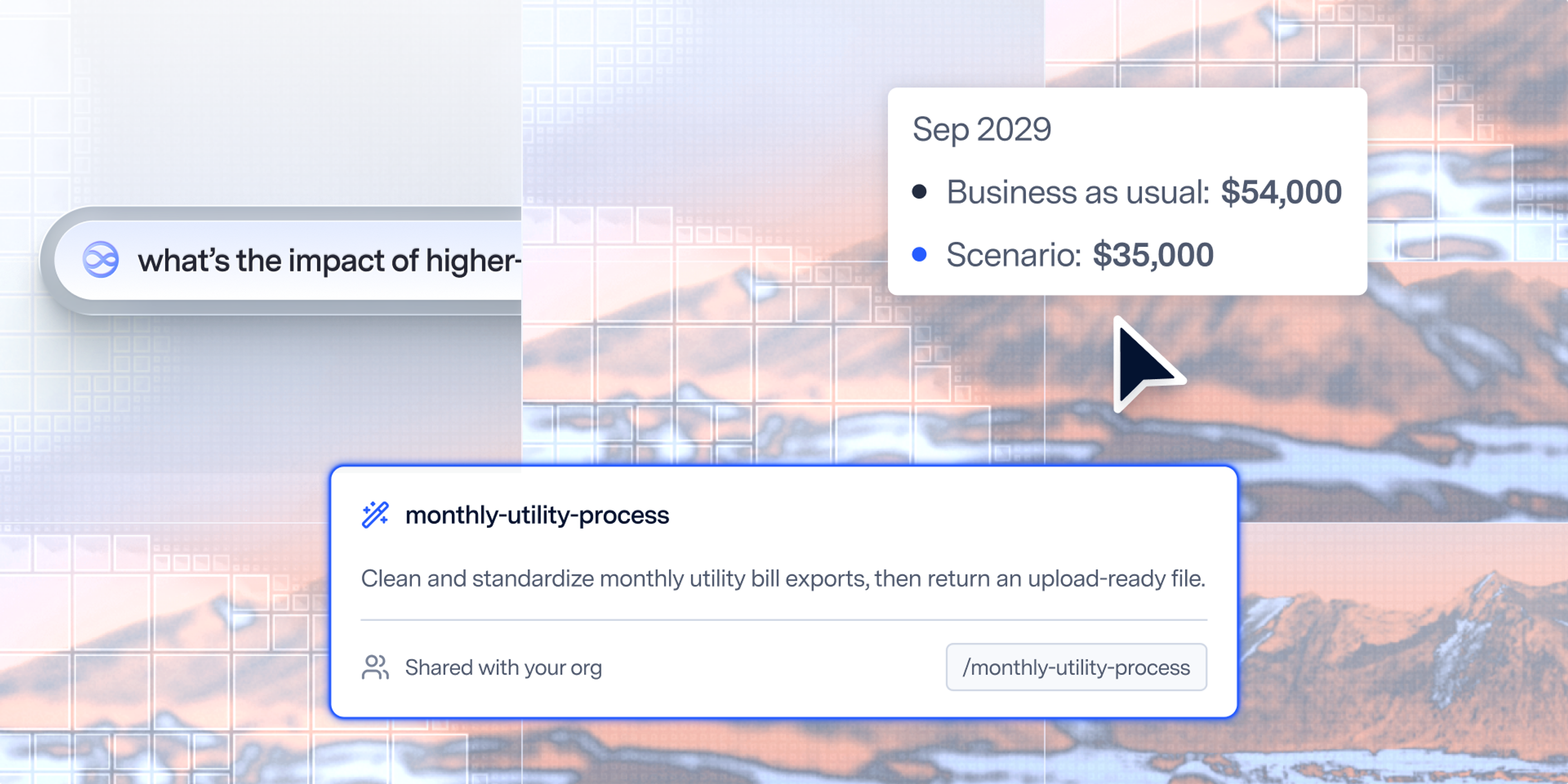
- Edit and update:Swap any node for supplier-specific or field-level data to sharpen results, and update as methodologies or supply chains change.
- Scenario modeling: model the footprint impact of real-world changes, like shifting soy sourcing regions within Brazil, before you make them.
- Compare sources: See data from different data sources side-by-side to understand the best fit for your PCFs and corporate footprint.
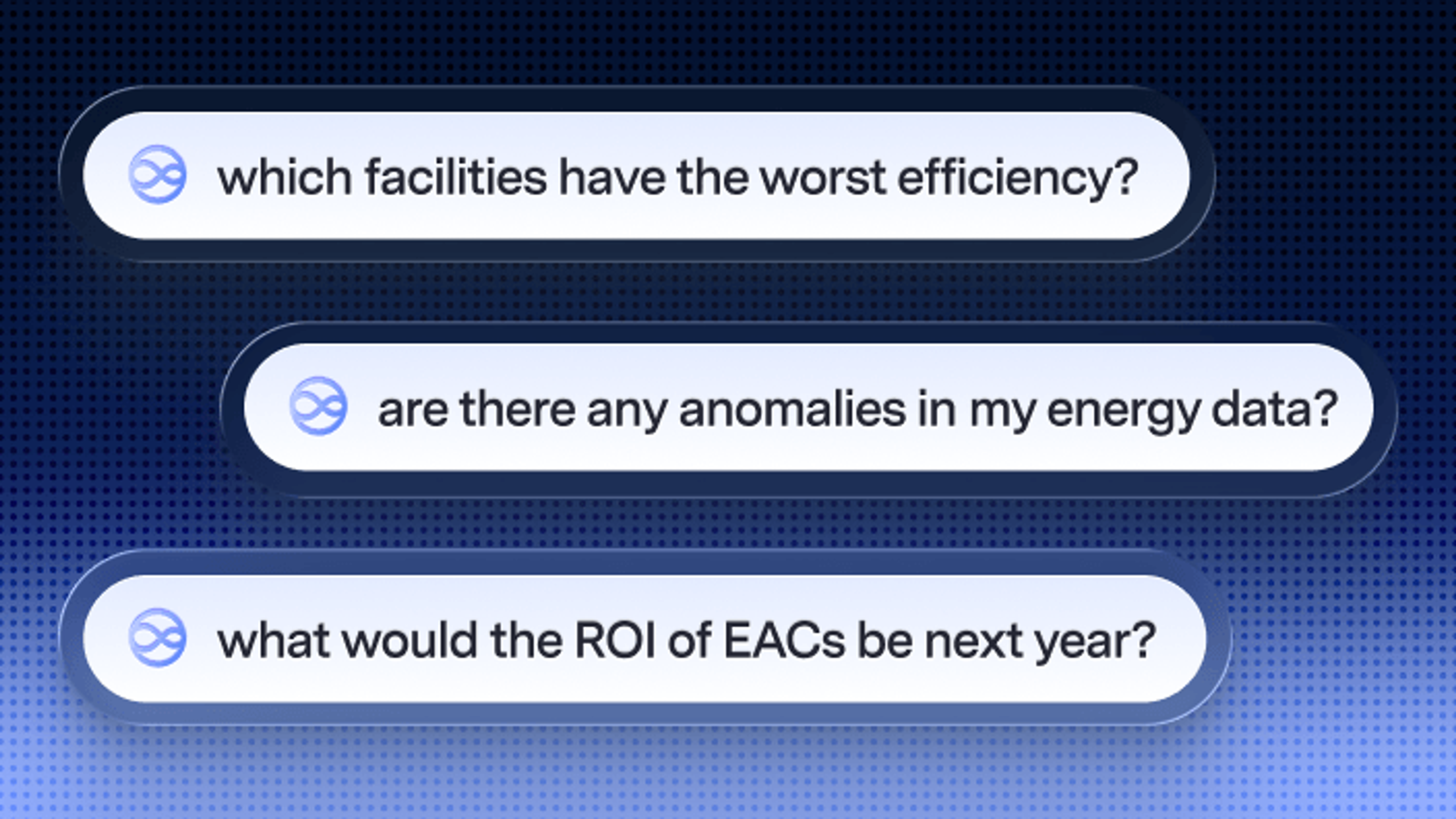
Across all of these capabilities, customers can use Product Footprints agents to ask in plain language for edits or analysis to keep whole portfolios of PCFs up to date and insightful.
Accelerating impact with food and beverage companies
More than 50 food and beverage companies use Watershed today, including Ingredion, Nomad Foods, Glanbia, sweetgreen, Dot Foods, and two of the world's ten largest food businesses. What they have in common: supply chains too complex for generic tools.
That’s why Watershed Product Footprints includes capabilities specifically designed for food and agriculture by our team with geospatial and remote-sensing engineers, ML scientists focused on agricultural modeling, and advisors from the food lifecycle analysis (LCA) community.
With Watershed, customers can leverage flexible PCF editing from any source, Land Sector and Removals Standard (LSRS) modeling (sourcing regions, chains of custody, cutoff dates, and linear discounting), EU Deforestation Regulation (EUDR), chain-of-custody support, and direct land use change calculations from farm polygons. Our expert AI is trained on the frameworks that matter in this industry—LSRS, chains of custody, EUDR, and Intergovernmental Panel on Climate Change (IPCC) soil N₂O methodologies, so it can do real analytical work across your portfolio.
On the buying side, that means faster, more targeted sustainable procurement. On the selling side, it means you can quantify your reductions and turn them into a commercial advantage.
Get started
If your team already licenses any of these data sources, you can bring them into Watershed Product Footprints today. If you'd like access data through Watershed, or want to see how these datasets could work for your products, reach out to our team.
The food industry's measurement challenge is hard. Your platform shouldn't make it harder.