With CDP reports due September 16 for scored responses, we’ve updated our CDP report builder with all the 2026 requirements, plus new features that will help you complete your report faster and create a stronger submission. New features include predictive scoring, the ability to import last year's answers, an AI reporting agent to help you draft and improve responses, plus new modules for plastics and biodiversity alongside climate, water, and forests—all inside the report builder.
What's new in your CDP report builder this year
Predictive scoring
New in 2026, we’ve added a predictive CDP score for each answer. Our reporting agent has the ability to predict each answer’s CDP score so you can get a good idea of where you stand as you work, and can focus your time on the questions that matter most for your target score band. Alongside your predicted score, we’ll suggest ways you can improve your answer to get a better score.
New modules: plastics and biodiversity
Watershed’s 2026 report builder covers all CDP modules, including newly introduced plastics and biodiversity modules. Sector-specific questions and ocean questions (not scored in 2026) are also covered. As in prior years, climate metrics auto-populate from your Watershed footprint, and you have the option to override any answer. Other modules are direct-input, with peer benchmarks and expert guidance available question by question.
Reporting agent
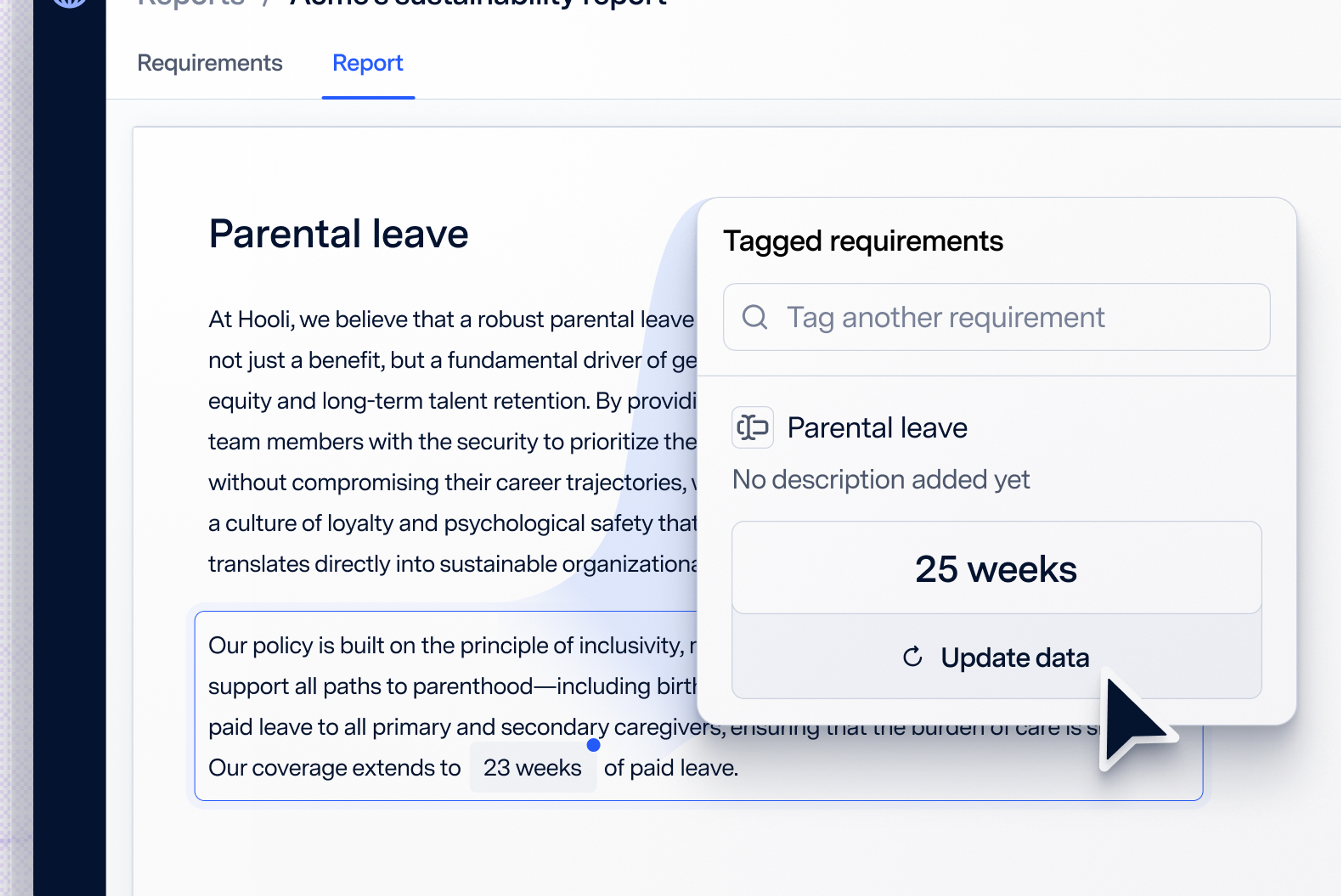
Watershed's AI reporting agent is now available for all reports, including CDP. It can draft qualitative answers by drawing on your existing data in Watershed, flag gaps in your disclosure, and suggest improvements aligned to CDP scoring guidance. If you've already answered similar questions in other frameworks (like CSRD or TCFD), the agent can adapt that language for CDP so you don’t have to rewrite your answers. You’ll be able to review suggested answers before adding them to your report.
Import answers from previous years
If you reported to CDP last year, you can import your previous responses and update what's changed rather than starting from scratch. Prior answers surface as a starting point in the report builder, and you stay in control of every edit.
What to expect for CDP 2026
The 2026 questionnaire hasn’t changed much from the prior year. Changes are concentrated where regulatory pressure is increasing: forests (aligning with the EU Deforestation Regulation) and plastics (aligning with EPR data requirements). Where changes are significant, there's a grace period on scoring impact for 2026.
How long does it take to submit to CDP?
Preparing a CDP submission can take anywhere from one to four months. Watershed is built to shrink that window. Your footprint data auto-populates into quantitative questions, peer benchmarks appear at every relevant question, and completed answers sync directly to the CDP portal via API. Our AI reporting agent drafts qualitative responses from your existing data, so you're reviewing and refining rather than writing from scratch. Returning reporters also start with last year's answers already imported and a predictive score in view, so setup takes hours, not weeks.
Customers have consistently told us they've cut their CDP reporting time in half using Watershed. We expect this year's additions to push that even further.
CDP selected Watershed for their own reporting
CDP uses Watershed as its own measurement and disclosure platform. 2025 marked CDP's second year reporting with Watershed, building on the consolidation work and initial public disclosure completed in their first year with us.
"Sustainability progress relies on robust data. Watershed's measurement process was a critical factor in our decision to use it for our own reporting."
Daniel Turner, Director of Reporting and Operations at CDP
Ready to get started with CDP 2026?
Existing customers: Our report builder is available in Watershed today.
New to Watershed: See how we can help you report to CDP faster—talk to our team.