Watershed, the sustainability AI platform, and AdAstra Sustainability, developer of the Orbae land use change (LUC) emissions dataset, today announced a partnership to jointly develop an open-source pipeline for direct land use change data under the Cornerstone Sustainability Data Initiative. Orbae is already used by sustainability leaders in the food and agriculture sector, including Danone and ofi, who have voiced strong support for open access to accelerate adoption across the industry.
The announcement comes as the Greenhouse Gas Protocol’s Land Sector and Removals Standard (LSRS), published in early 2026, starts the clock on a new reporting requirement: As of January 1, 2027, companies will need to measure land use change emissions in line with the guidance for compliant reporting in 2028. Given the complexity of the topic, Watershed and AdAstra see an open-source approach that invites collaboration from the broader community as the fastest way to advance the underlying science.
Why open source, and why now
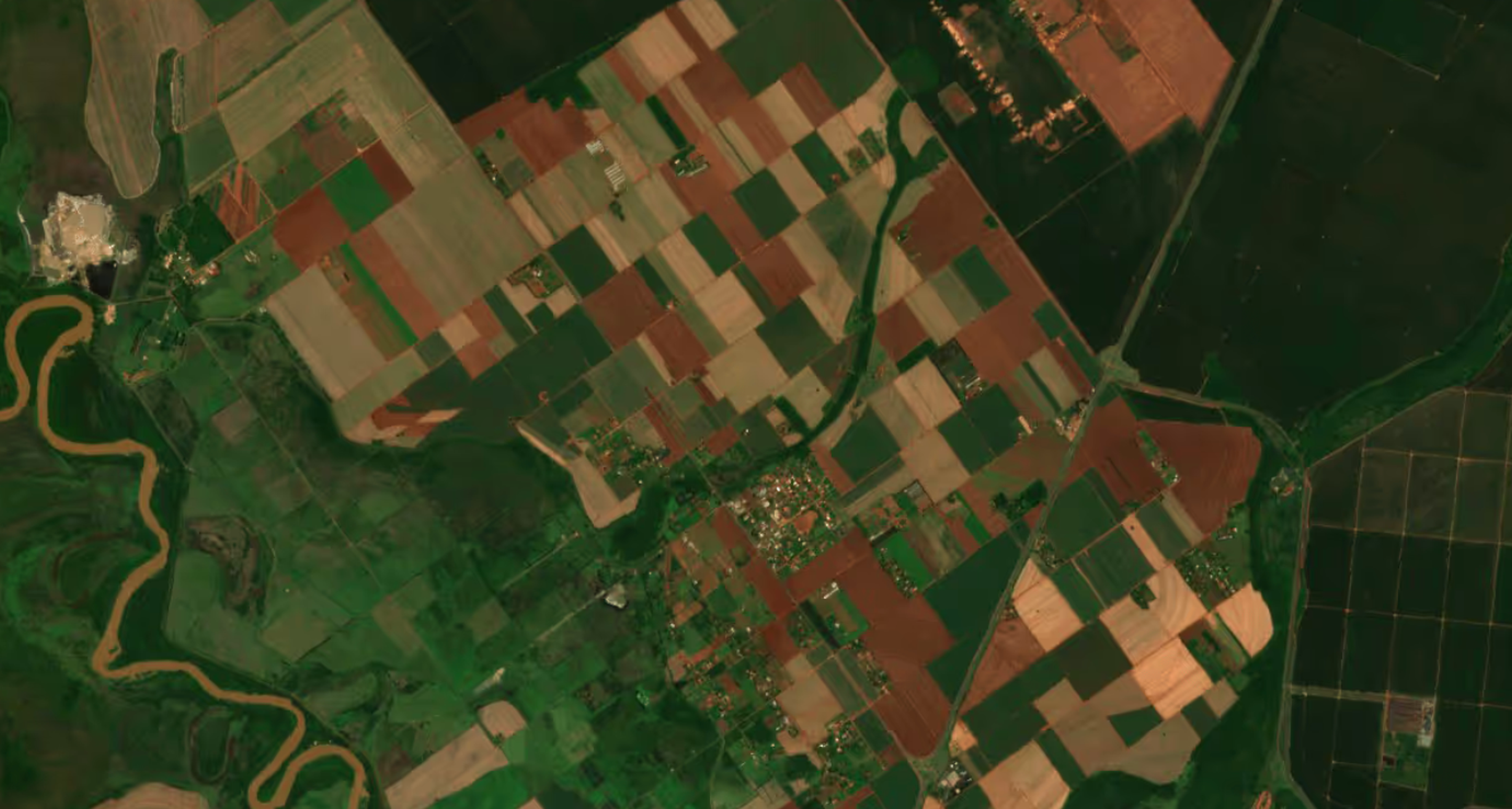
LUC emissions are often the single largest category in a food or agriculture company's footprint. For high-risk commodities such as cocoa, they can account for over 90% of total product emissions. Despite this, companies, standard-setters and regulators have largely worked from varying, incompatible datasets, making it difficult to agree on where land conversion carries the highest carbon cost or verify progress against SBTi FLAG targets.
Orbae's jurisdictional direct LUC (jdLUC) data and methodology have been openly accessible since early 2025. What's new is that the code behind the data — the pipeline that produces it — will become open source. This extra layer of transparency will let the market verify, scrutinize and build on the methodology itself.
What's coming
In 2027, Watershed and AdAstra will open-source the next generation of direct land use change (dLUC) data via Cornerstone. Built on a global LUC emissions layer, the code will support both farm-level assessment and jurisdictional calculations covering more than 90% of global cropland.
In the meantime, two datasets will help close near-term coverage gaps. Cornerstone’s first release under this partnership will be an open-source and LSRS-compliant global statistical LUC (sLUC) dataset in 2026. AdAstra will also release "jdLUC proxy" later this year — a scalable approach following jdLUC principles — open-sourced under Cornerstone in 2027. jdLUC data, insights and visualizations will continue to be openly available in Orbae.
The addition of this dataset meaningfully broadens Cornerstone's data coverage. Cornerstone began in 2025 with a mission to build and maintain open access to the critical datasets organizations need to measure and act on scope 1–3 emissions. Other open datasets housed at Cornerstone are USEEIO, CEDA, eGRID and the GHG Emissions Factor Hub.
About the Cornerstone Sustainability Data Initiative
Launched in 2025, Cornerstone is an open data initiative which aims to preserve and expand access to foundational sustainability data. It was jointly founded by ERG, The Stanford Doerr School of Sustainability’s Sustainable Solutions Lab, and Watershed. Open datasets housed at Cornerstone are USEEIO, CEDA, eGRID, the GHG Emissions Factor Hub, and now Orbae. You can learn more and access the datasets at cornerstonedata.org.