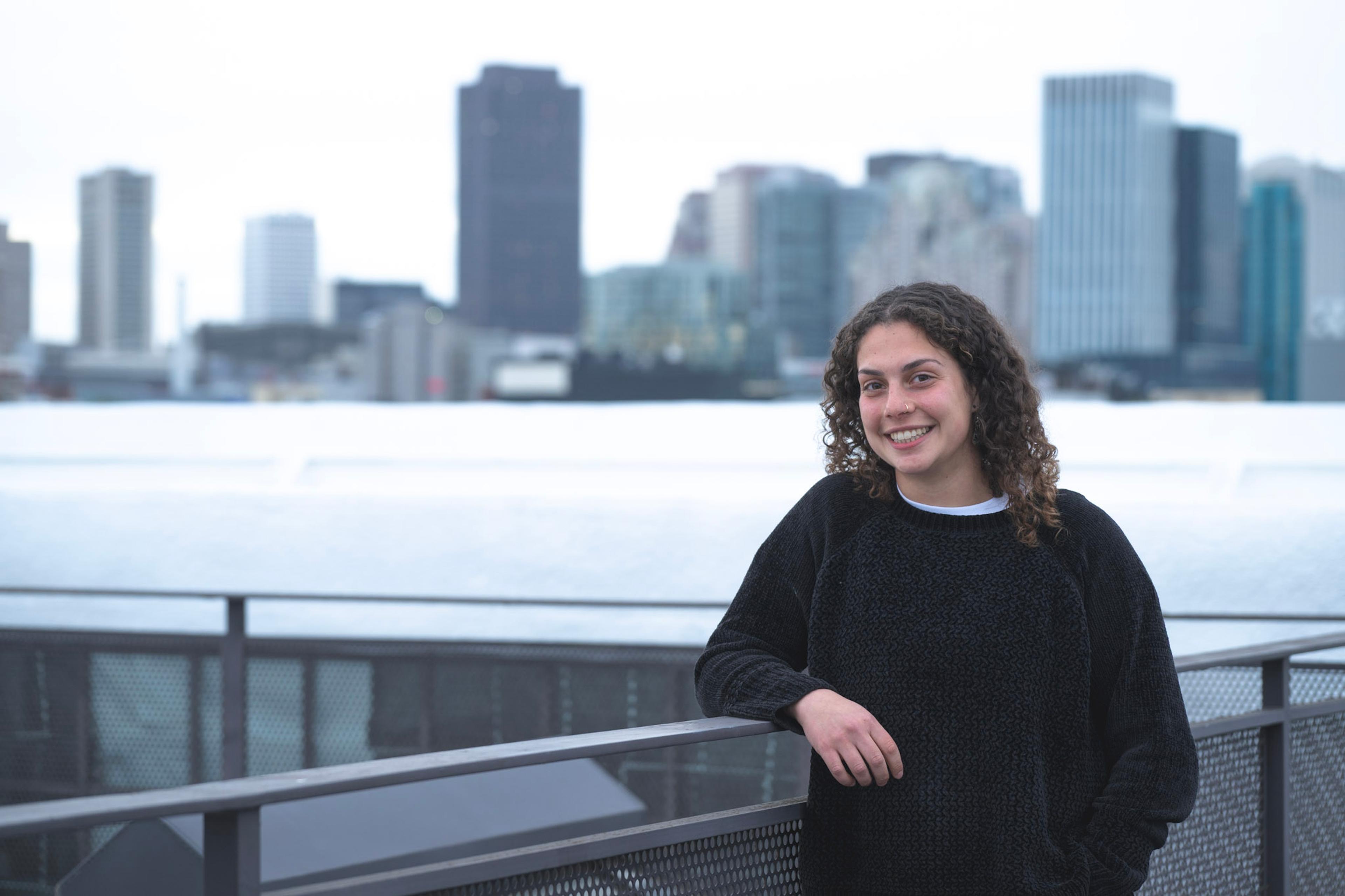
Aviva is a Cloud Infrastructure Engineer at Watershed based in San Francisco. She joined the team during the company’s migration to Google Cloud Platform (GCP) and has since worked on foundational systems that support some of Watershed’s heaviest workloads.
In this interview, Aviva talks about her path into infrastructure, what it’s like to own large pieces of work at a growing company, and why Watershed’s mission matters to her.
We’re hiring, including on our cloud Infrastructure team — learn more about our open roles here:
- Engineering manager, cloud infrastructure (San Francisco)
- Software engineer, cloud infrastructure (New York City)
- All open roles
What were you working on before you joined Watershed?
Before Watershed, I was an engineer on a product team, primarily working on backend core product surfaces. In my last year there, I helped migrate all of my team’s microservices to run on AWS EKS. That hands-on experience with cloud infrastructure changed how I thought about systems and scalability. After that migration, I realized I really enjoyed that kind of work, so I started looking for roles that were more infrastructure-focused.
Earlier in my career, I’d worked with nonprofits and in the federal government, primarily in public and environmental health. Those roles aligned strongly with my values, but there wasn’t enough technical challenge or engineering resourcing to have the kind of impact I wanted.
So I started looking for a role that would both challenge me technically—especially in infrastructure—and align with my interests.
What really drew me to Watershed (besides the mission) was that they weren't specifically looking for people with extremely deep, narrow expertise. Instead, they were looking for people who are curious, empathetic, and invested in improving infrastructure that accelerates the whole company. It felt like the perfect fit.
That’s interesting—can you say more about that distinction?
When I joined, I didn’t have a traditional infrastructure background. I didn’t know all the ins and outs of GCP yet—though I’m learning quickly. What I did have was product experience, and I wanted to bring that perspective into infrastructure: building a scalable, maintainable foundation that internal stakeholders can actually understand and use.
I think that says a lot about the culture here. People are genuinely invested in each other’s growth and generous with their knowledge and time.
We also have a very senior and technically deep infrastructure group, which has been invaluable for learning while still contributing my own perspective.
Beyond the role itself, was there anything else that convinced you to join Watershed?
I think everyone I spoke to during the interview process mentioned caring about the environment, and Watershed’s mission, and that really stuck with me. That value shows up everywhere—among the founders, leadership, and across the company. It’s cool to share that motivation with the people you work with, and getting to work side‑by‑side with climate scientists and policy experts makes even deep infrastructure work feel closely connected to real‑world climate decisions.
What did you think the company or job would be like before you started, and what turned out to be different than expected?
At my previous company, my infrastructure work involved building on top of systems that a dedicated cloud infrastructure team had already set up. When I joined Watershed, I expected I would go deeper technically, but I didn’t fully realize how much ownership I’d have at a smaller company. I’ve owned much larger chunks of work than I expected, especially coming in during the migration.
When you say “the migration,” you mean the GCP migration, right?
Yes. A few months after I joined we began to migrate all of our services from a third-party to owning our entire infrastructure on Google Cloud. I was new to Watershed, but we were all relatively new to GCP. A lot of parts genuinely felt like building the foundation from the ground up.
What’s a project you’ve been especially proud of, and why?
One of my biggest projects has been building new compute backends for our dedicated worker infrastructure. We run isolated, ephemeral compute environments for heavy workloads like customer footprint generation and data migrations so they don’t impact the performance or stability of our core services.
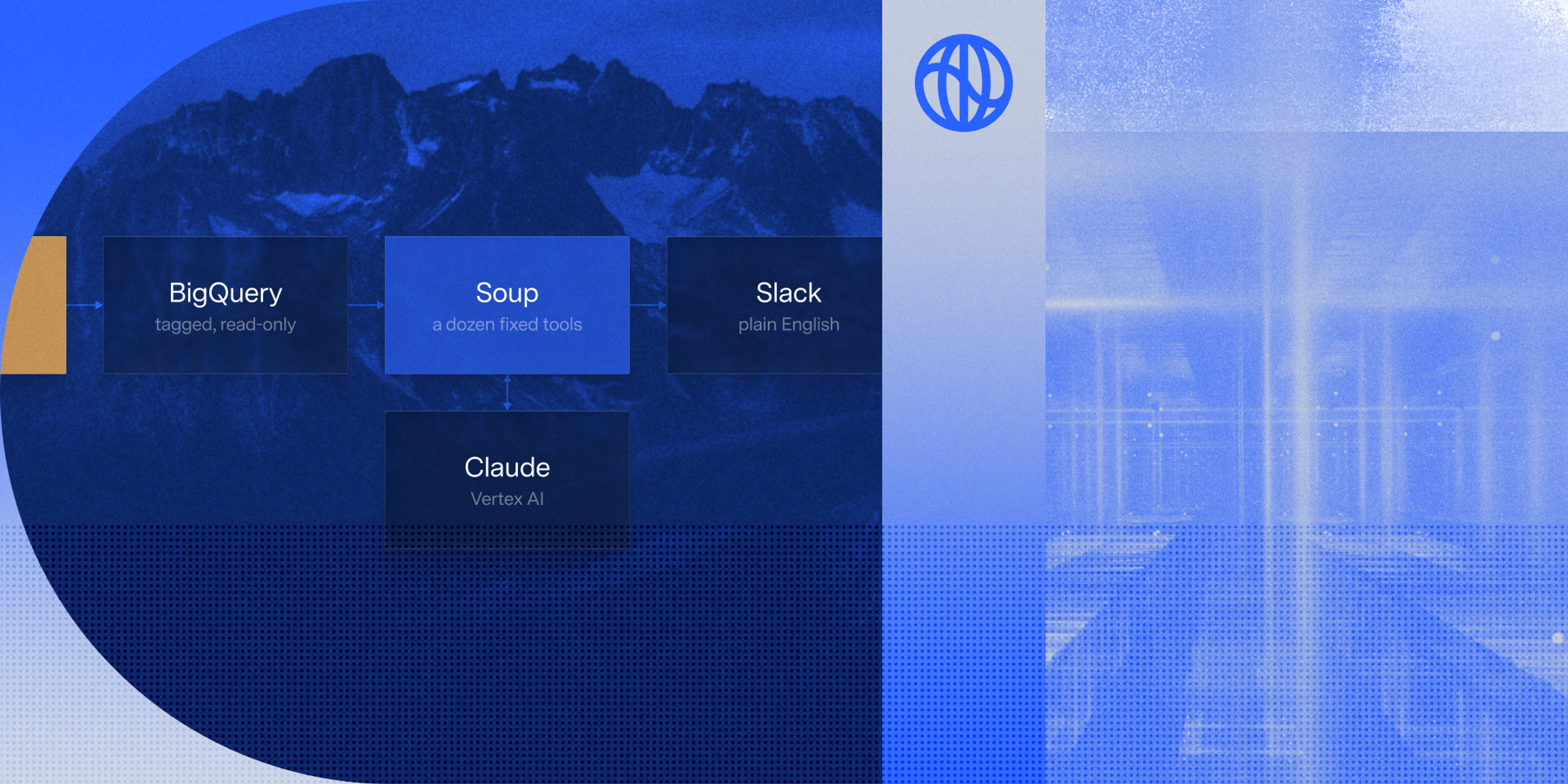
As part of the GCP migration, I set up two different systems—one using Cloud Run jobs and one using virtual machines—to optimize for different kinds workflows.
I worked closely with other teams to prototype their use cases and test configurations using real data and real customer workflows. Most of the GCP migration so far has been lift-and-shift, but this was one of the first places where we’re already seeing real gains from the move.
Were these issues already pain points for us before?
Yes—huge pain points.
Previously, we didn’t have good observability, we had limited control over resource allocation, and some data migrations took up to 24 hours because they had to run sequentially.
Now, we can spin up thousands of VMs in parallel, which dramatically reduces processing time. The observability improvements and the flexibility to specify exact machine types, memory, and CPU have already been really helpful.
What’s a skill you’ve developed here that you didn’t expect?
One operating principle that’s especially important on the infrastructure team is Stack Rank and Drop, and I’ve learned a lot from practicing that. At larger tech companies, priorities often come from directors, managers, or PMs. Here, I feel more empowered to decide what’s most important. That includes learning how to say no—which is hard, because everything feels important—but it’s also been really empowering to take ownership and say, “This is something I think is important, and I’m going to work on it.”
What’s a common misconception about your team?
I think one misconception is that we’re off in our own world, and that infrastructure is this separate layer that’s disconnected from the product work happening above it. In reality, a lot of my work is deeply integrated with the product and done in collaboration with other teams to understand their constraints and build systems that actually solve their problems.
Can you share a time when someone helped you succeed here?
Honestly—every day.
During the dedicated worker project, it was incredibly helpful to partner with Data Infrastructure and Product Footprints. They prototyped their workflows so I could test configurations against real use cases. Having real data and real constraints made a huge difference.
There have also been many times when something has gone wrong while I’m on call, and I’ve needed help understanding product context. Everyone is always willing to jump in and explain how things work. The collaborative culture really shows up in moments like that.
Switching gears a bit—on a more personal note… what’s your favorite work ritual?
Definitely the walks. A lot of my one-on-ones end up being walking meetings, and most days after lunch my team and friends go on coffee walks together.
Getting outside, moving your body, and spending time together outside the context of work makes a big difference, and is one of the reasons why I find coming into the office so enjoyable.
What’s your “I will talk about this for 20 minutes if asked” subject?
I have two!
The first is Ultimate Frisbee. A lot of people think it’s just a casual sport, but it’s actually a whole competitive world. I spend most of my time playing, and it’s my community outside of work. I’ve gotten to travel all over the world for it, and I’m even going to Hawaii next month for a tournament.
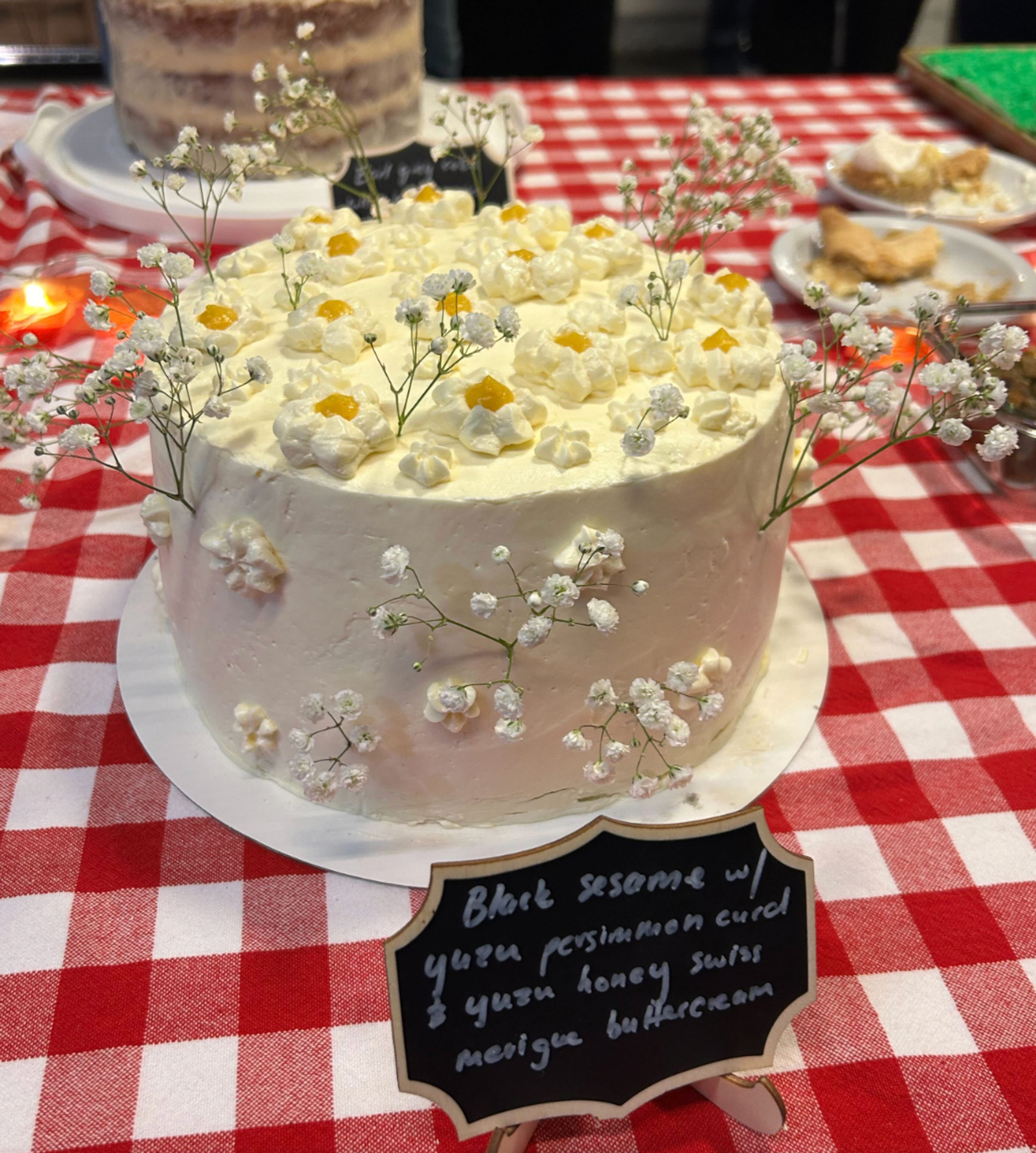
The second is baking. I wouldn’t say I’m the best baker—but it’s really fun, and I love learning new techniques and experimenting with recipes.
[Editor’s note: Aviva is being humble—she won 2nd Place in the Cake category of the Great Watershed Bake-off, baking a black sesame cake with a yuzu-persimmon curd and yuzu-honey swiss meringue buttercream.]
Are there other things you like to do to recharge?
I love hiking, trail running, backpacking, and camping. I really love California, and I’m already planning some summer backpacking trips.
One thing that’s made me care deeply about the environment is having trips canceled because of wildfires and other climate-related impacts. Those experiences make the work here feel very personal.
And last of all, what Slack emoji best represents you?
I think my favorite one is :hotdog-dab:.
What’s the context you’d use it in?
Honestly, anything. I used it yesterday after we'd been debugging an issue for so long and it was preventing us from migrating the rest of our background processing infrastructure. We finally figured it out yesterday and successfully generated a test footprint. Now we can finish the GCP migration.
Yeah. Big :hotdog-dab:.

Aviva’s experience reflects what it’s like to work on Cloud Infrastructure at Watershed: real ownership, close collaboration with product and data teams, and the chance to build systems that matter.
We’re hiring on Aviva’s team. If you’re excited about cloud infrastructure, large-scale systems, and working on climate solutions, we’d love to hear from you.