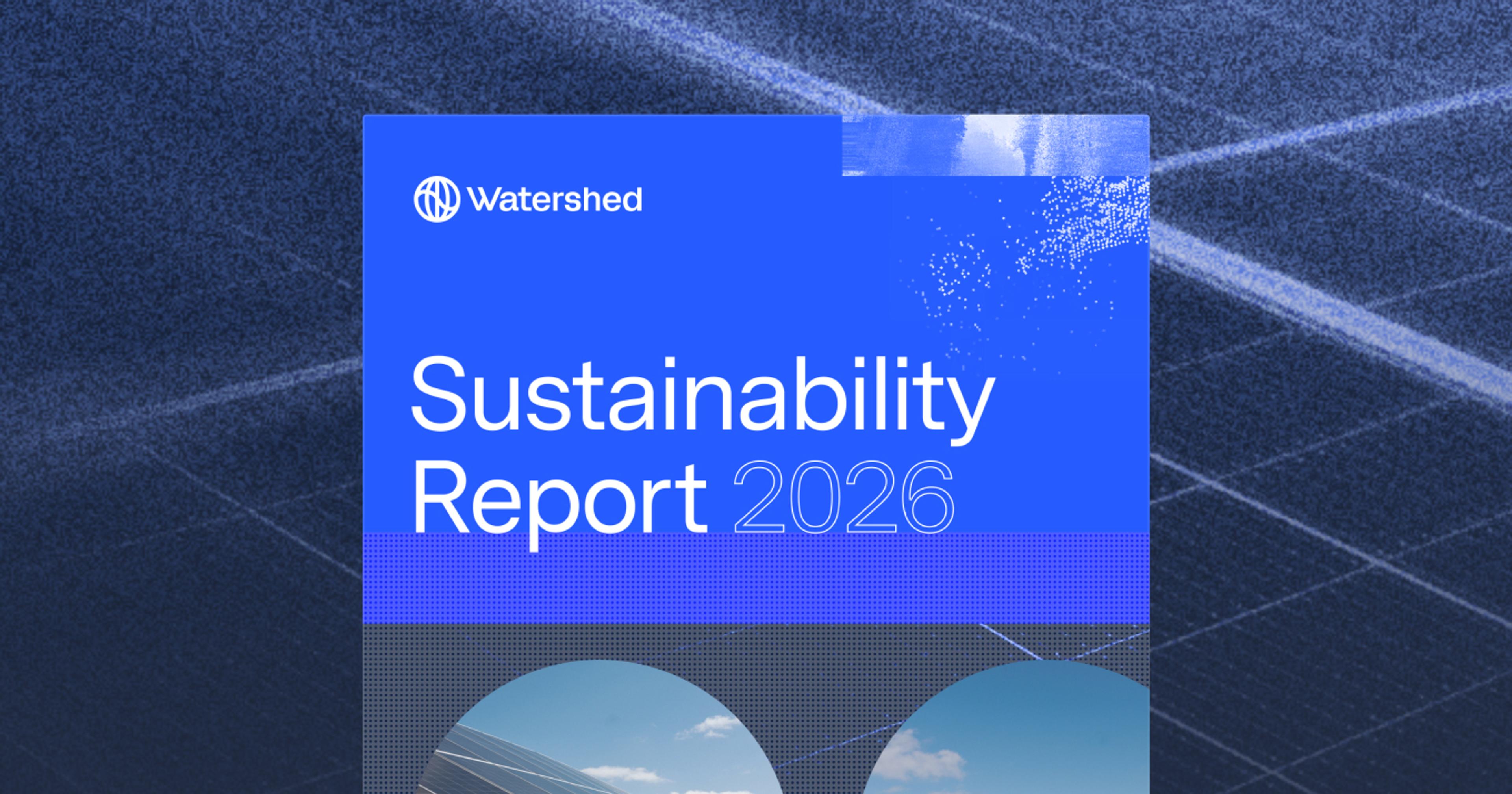



We started Watershed because we believe companies could be the most powerful force in the climate transition. Through our work with leading businesses around the world, we’ve seen the impact sustainability teams can have when given the right tools. Today we're publishing our 2026 sustainability report, sharing just some of their impact stories along with our own.
Watershed customers now manage over 3.5 billion tonnes of CO₂e, or more than the annual emissions of France, the UK, Germany, and Italy put together. They have catalyzed more than $500 million in new clean energy investment, funding 270+ solar and wind projects across six countries. The report details this impact, including: Canva's supply chain VPPA, which built four Illinois solar farms now generating clean power for surrounding communities, Medtronic using Watershed Product Footprints to cut PCF development costs and factor carbon into strategic decisions, and Figma's employee-led Net Zero group investing $750,000 in carbon removal.
The report also covers what we've been building behind the scenes. This month, Dr. John Bistline, Watershed’s Head of Science, published an open framework for corporate AI emissions measurement to standardize efforts as companies face increasing calls to disclose AI emissions. Our science team continues to build on the work of Cornerstone, our joint initiative with Stanford University and ERG, to preserve and expand the emissions data models behind 65% of corporate scope 3 measurements and the scope 1 and 2 resources relied on by more than 80% of US companies.
And it covers us. Our FY2026 market-based emissions were 4,539 tCO₂e, down 15% from the prior year. We've received third-party assurance on select portions of our footprint and committed to set a science-based target. The report details how we got here, including using Watershed Product Footprints to evaluate our first company-wide branded swag.
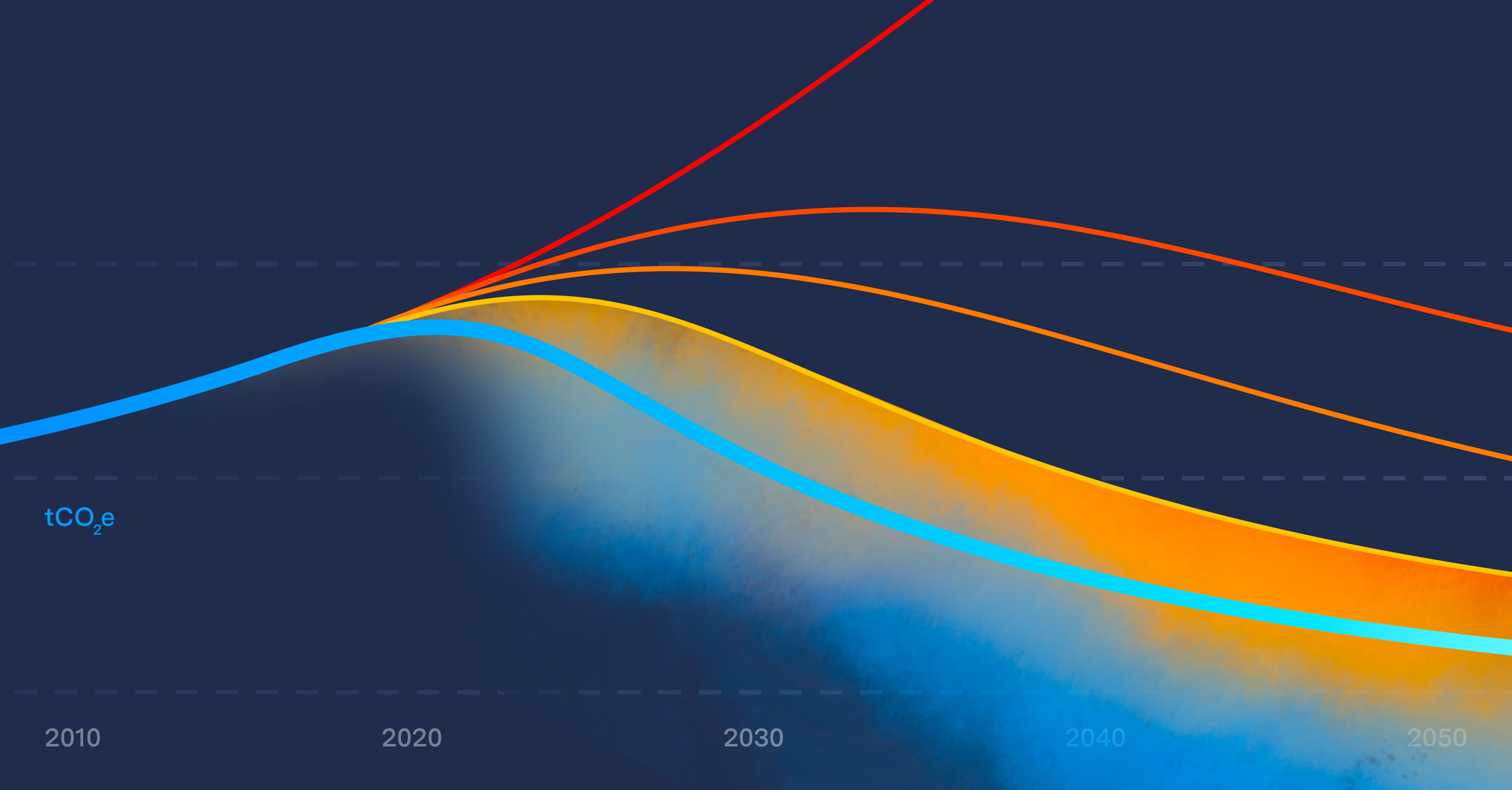
Watershed’s near-term goal is to help customers reduce or remove 500 million tonnes of CO₂e, roughly 1% of annual global emissions, by 2030. There's more to measure, more to reduce, and more to build. And we’re committed to holding ourselves accountable along the way.