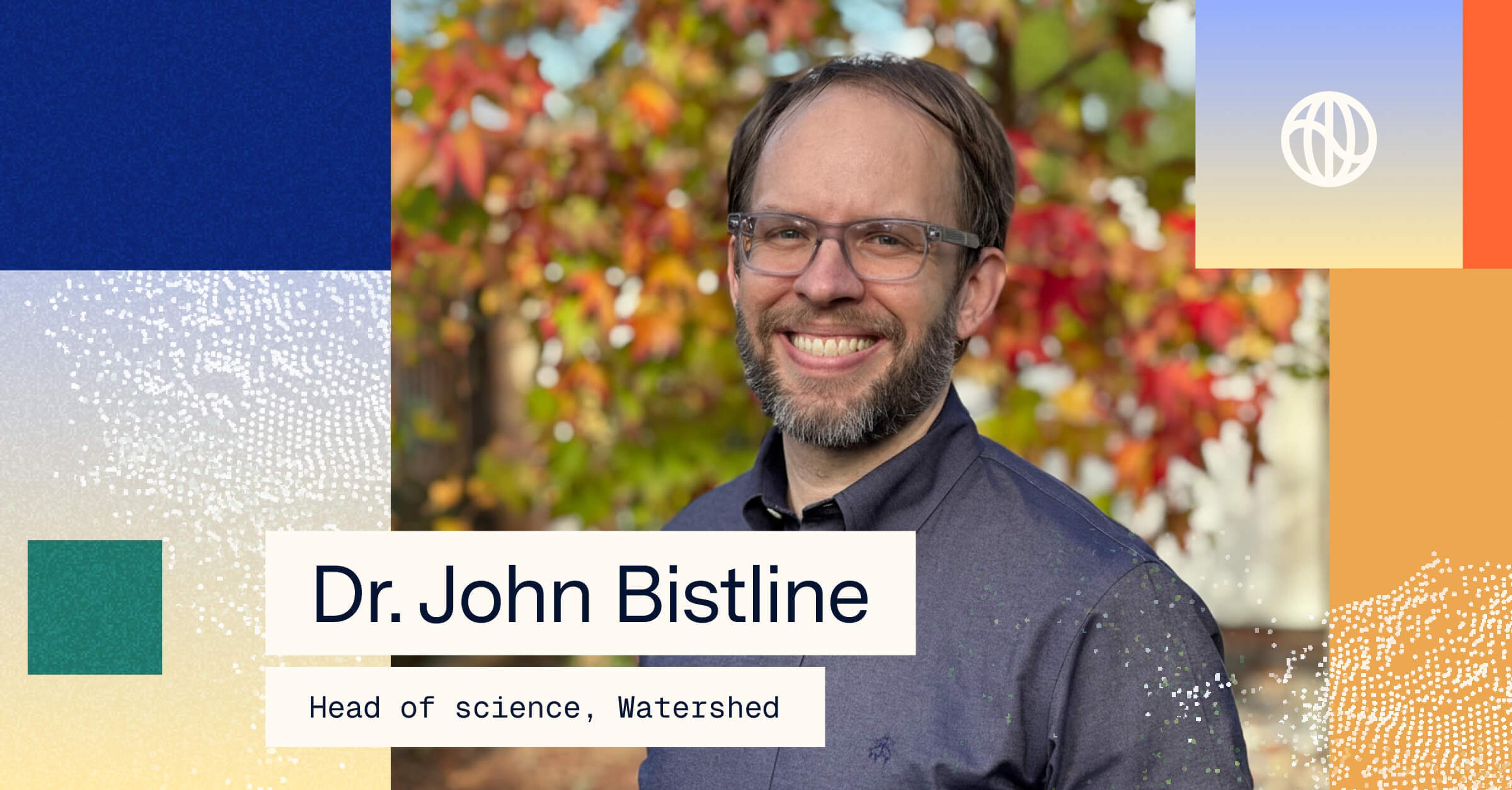
Today, we're welcoming Dr. John Bistline to Watershed as our new head of science. Dr. Bistline joins a world-class science team that includes former Watershed heads of science Dr. Sangwon Suh and Dr. Steve Davis, who will remain in advisory roles.
Dr. Bistline spent nearly two decades at EPRI (the Electric Power Research Institute), where he led research on energy systems modeling and climate policy analysis, including landmark work on the Inflation Reduction Act published in Science, and a widely-cited study on the electricity demands of AI-driven data centers. He's an author of the US National Climate Assessment and a contributor to the Intergovernmental Panel on Climate Change (IPCC).
We sat down with Dr. Bistline to learn more about what brought him to Watershed, what companies should know about AI and sustainability, and what keeps him going after two decades in climate.
What drew you to Watershed?
I spent nearly two decades at EPRI building and running large-scale models of the power sector and broader energy systems—understanding the impacts of different policies, technologies, and market forces, and how those could alter the energy transition. What I really enjoyed about that work is that it wasn't abstract. Electric companies, policymakers, and other stakeholders were using those models to make real investment decisions and policy choices that impacted emissions.
Over time, I became focused on how the corporate sector fits into the energy transition. My recent work on AI-related data center electricity demand underscores how rapidly things are shifting, and how hungry companies are for rigorous, science-based answers about their energy and emissions footprints.
When I met the Watershed team, I saw a company that shared that conviction—that better science and better data are the foundation for real decarbonization. That alignment felt exciting and rare.
Can AI help reduce emissions, or does it make the problem worse?
At EPRI, I led a research project looking at how AI and data center growth could alter electricity demand across the US. Our research found that data centers are on track to consume 9-17% of the country's electricity by 2030, up from 4-5% today.
The direct energy use of data centers is real and growing. What that means for emissions is uncertain, and honestly, it could go either way. It depends on whether corporate clean energy commitments drive real procurement, and on whether emerging technologies like advanced nuclear and geothermal actually reach commercial scale in time to meet surging demand, rather than just pushing load back onto fossil generation.
But then there's the next layer. Beyond deployment today, AI could help with the research and development of nascent low-carbon technologies like nuclear fusion for future deployment. There are also areas of ambiguity. Electric autonomous vehicles, for example, could rapidly increase the number of vehicle miles served by EVs, which could lower emissions. But on a longer time horizon, you could see people living farther from where they work, increasing total travel demand. Those longer-run societal changes are really speculative.
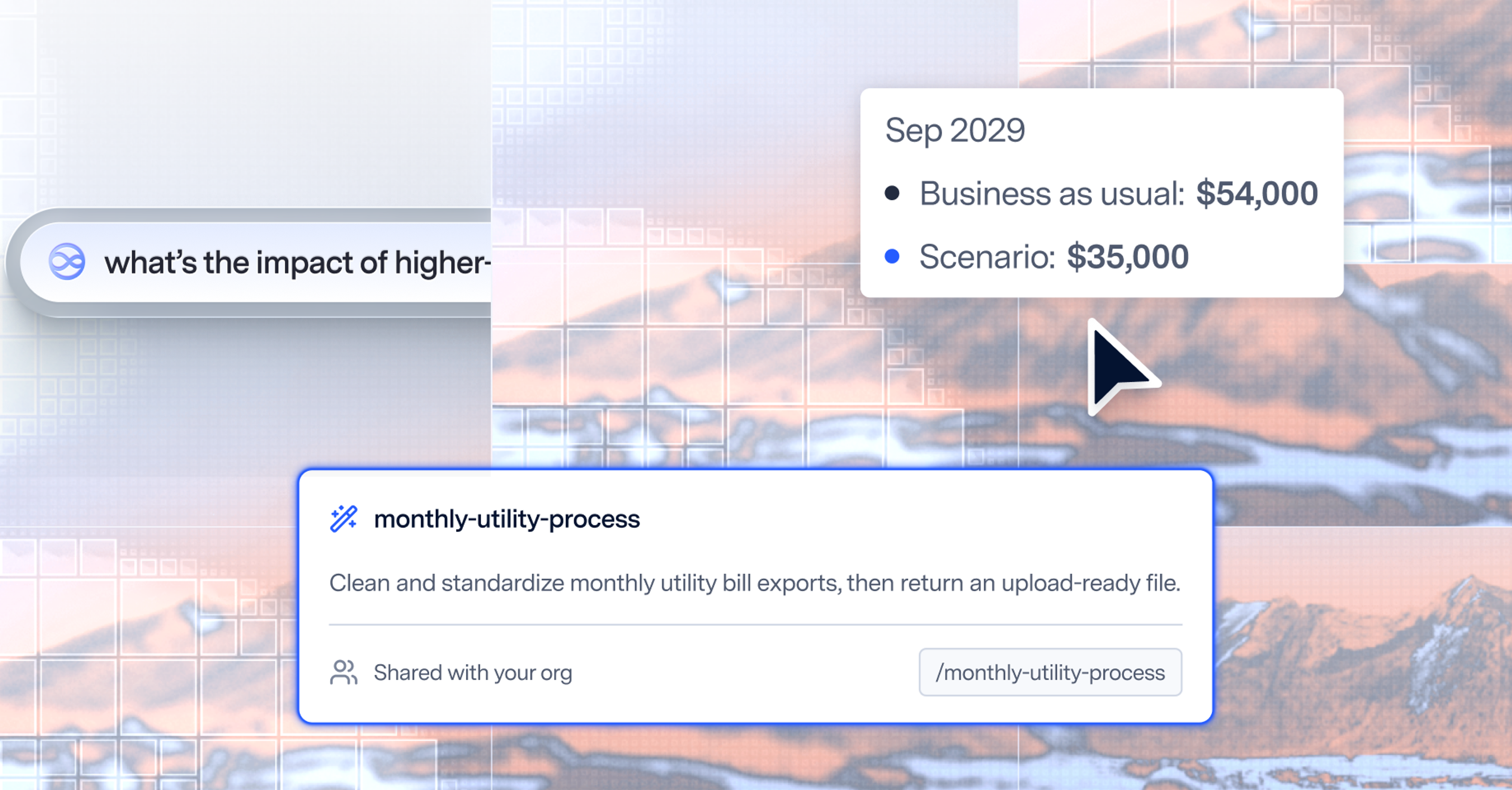
One way AI can help with lowering emissions today is through the kind of platform Watershed has built—helping companies measure emissions and discover decarbonization options. AI can help with data challenges around upstream and downstream emissions and the cost of different reduction options that were either too onerous for companies to think through before, or just impossible because the right data wasn't being collected at the right resolution. Part of my remit at Watershed will be to drive the development of AI that gives companies the data they need to make smart and effective decarbonization decisions.
What will your role at Watershed look like day to day?
My role as head of science is to make sure that the climate science underneath Watershed's platform is rigorous and current. That means building out methodologies for how we measure emissions, how we model decarbonization pathways, and how we translate the latest energy and climate research into tools that companies can actually use to decarbonize. For example, one thing I’m working on right now is understanding how recently proposed changes to scope 2 accounting standards could affect how companies measure and report emissions from their electricity use, and what that means for decarbonization commitments they’ve already made.
A big part of that is also about credibility. Companies are making billion-dollar decisions based on their measurements, and stakeholders are really scrutinizing the results, so the science has to hold up. Signing decade-long power purchase agreements, committing to specific abatement targets, choosing which suppliers to work with—these are all decisions with large financial and emissions stakes.
“Companies are making billion-dollar decisions based on their measurements, and stakeholders are really scrutinizing the results, so the science has to hold up.”
Dr. John Bistline

I'm excited to work alongside Sangwon, Steve, and the rest of Watershed’s climate science team, whose expertise in emissions data and lifecycle analysis is world-class.
After two decades in climate, how are you feeling about the future?
The future isn't fixed, and the choices that we make today really shape outcomes, both in the near future and in the far future.
Even in the US, where there's a lot of turmoil and distractions that could shift the focus away from decarbonization, I still see a lot of companies that are as eager to reduce emissions now as they were a couple of years ago. The timelines they have in mind may have shifted a bit, but the focus hasn't gone away.
In navigating this road, modeling and scenario analysis are essential. Companies need tools that can handle both complexity and uncertainty. It's important to have the right tools and the right data at hand to have a clear-eyed view of your options—not just a single number, but a range of pathways and an understanding of the trade-offs.
“One thing I’ve learned over the course of a career in climate science and clean energy is that the future isn't predetermined. It depends on the decisions we make today and the tools we use to inform those decisions.”
Dr. John Bistline

One more thing—tell us about your Taylor Swift connection.
As an author of the US National Climate Assessment, I was trying to think of a fun way to make science exciting and accessible. My wife, who's an English professor, pointed out that my social media posts got a lot of traction when they bridged a hot topic people were thinking about with the science I was already doing. So around the time Taylor Swift and Travis Kelce were all over social media, I found a way to explain the National Climate Assessment through Taylor Swift's outfits. It took off.
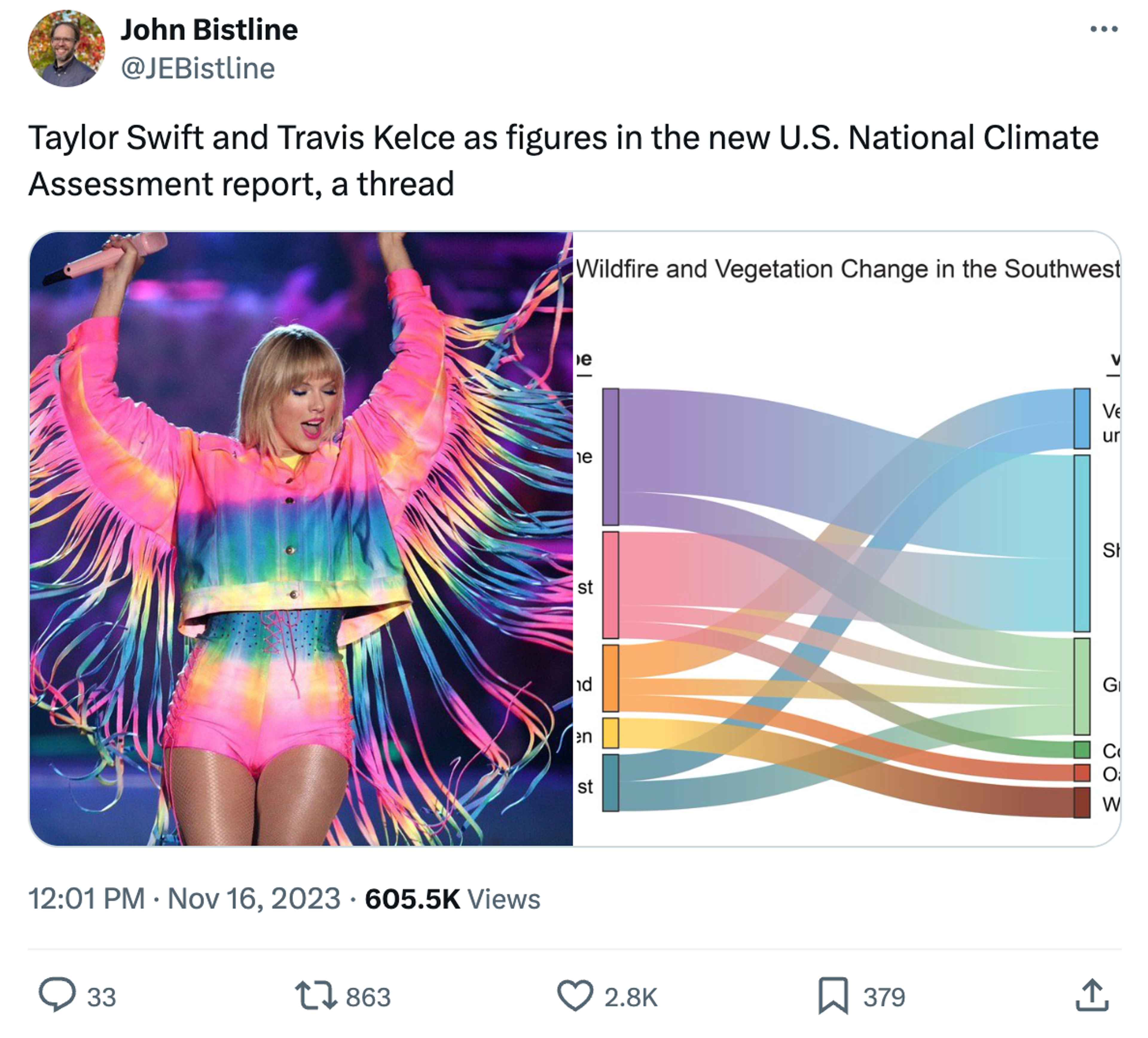
Doing great science and having rigorous analysis is one element for success, but ultimately, whether your audience is trying to influence a decision at a company or talking with policymakers, that layer of communication is all the more important. That's another reason I was drawn to Watershed—the tools and platform encompass the full picture, going from sound science and data all the way through to communications.